Tuesday, November 29, 2011
Administrivia
One of the things weavers new to selling their work don't understand at first is the aspect of marketing/selling and how much time winds up in the details of getting their textiles ready for sale and then actually offering them for sale to the public.
It is legally required in Canada and the US (and I assume other countries) that textiles be labelled with fibre content and care. In Canada, household textiles and fashion accessories can be labelled with a simple hang tag. Garments must have 'permanent' labels (with permanent defined as 10 cleanings or launderings).
It is one reason why I don't make garments - I don't want to have to deal with the issue of permanent labels. To buy commerically made labels generally means an order of at least 100, more usually more than that in order to get a decent price and since I often change the yarns I use, I'd be constantly running into the problem of changing fibre content.
Getting the textiles labelled takes time. The system I now use is that of a paper hang tag with my name, logo, a little marketing promotion on the front with a small hote drilled in the top of the tag. On the back I apply a label with general washing instructions and then hand write in the fibre content as required. Once the labels are ready I use a stem gun with 1 inch stems to attach the labels to the textile. Sometimes I price them at the same time, sometimes I leave the pricing for later.
This is just one of the unseen - and largely unpaid - jobs that newbies to selling don't take into consideration in their pricing formula.
Most new sellers come up with a price that will cover the cost of their materials with maybe a little extra for their time to make the cloth but they don't cover things like overhead (all the expenses that continue regardless of whether or not one is actually making something), and the myriad expenses involved in marketing.
The problem with marketing is that largely it is more expenditure of time rather than money, although money can also be spent - the aforementioned tags/labels, booth fees, travelling to and from shows, website fees when selling on line, banking fees (including Paypal, Art Fire, etsy, eBay fees) and so on and so forth. It is these expenses that get covered in the retail mark up portion of one's price calculation.
If the weaver does not have a retail mark up in their formula, then they will be working for nothing, or else working at a loss as those expenses are not covered except for coming out of the weaver's pocket.
From time to time people ask me to submit articles for guild newsletters on the business of selling. From time to time I give seminars - usually discussing pricing issues. I'm wondering if people would be interested in a small publication geared toward business issues of selling weaving......?
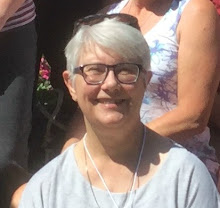
(Yes, that's a handwoven tablecloth on my table - Swedish Snowflake, woven double width in order to get a cloth wide enough to cover my table properly. And yes, it was a once in a lifetime project, never to be repeated!)
Sunday, November 27, 2011
A Little Procrastination...
wet finished Fox Fibre towels - the colour has developed nicely - from left to right - 50% green, 50% brown, and 25% green
...is sometimes a good thing.
Got some pressing done today and as it's a fairly mindless task pressing is, my mind tends to wander. With the Big Project sort of dominating my thought processes I was worrying away at the logistics of getting everything done - text written, diagrams to include, samples to be woven and so on. And of course the assembling of the sample pages and text pages.
For Magic I had my brother's basement rec room. I don't have that option for this project. Nor will I have my mom's basement as we are hoping hard that her house will sell quickly.
One option is to re-organize the annex and set up an assembly station there. Which means that I'm going to have to hang on to the annex for a while longer - first to press the samples (so much easier to do on the big press, even though all of the samples for Magic were done on the small flat bed press), and then to assemble the pages.
As I was thinking about all of those things, including the samples I want to include, it suddenly occurred to me that the current warp on the AVL pefectly fits the parameters of one of the samples I want to do. Even better, there is just about exactly enough warp left to actually weave that sample! And I had been fretting about not having gotten more of this warp woven by now. :}
So tomorrow, instead of carrying on with the towels I had planned - I can always make more towels later, right? - I will redesign the treadling to weave the samples and begin weaving those.
Wow! Progress on the Big Project before December! Maybe I can make the May deadline for the Alberta conference after all????
Currently reading Brute Strength by Susan Conant
Friday, November 25, 2011
Satisfying Progress
Today I cut off what I've woven so far on the beige towel warp. Considering I've been sick with a cold, progress is...satisfactory. I'm trying very hard to not get on my own case for having done 'only' this much.
I have, after all, done a bunch of administrivia and cleared a lot of the paperwork I'd been procrastinating over off my desk. :)
Today I mailed the contract for HWSDA next May. Only one seminar, but since I don't know for sure if Doug will be able to come with me and I'll have a vendor booth I figured I'd better not apply to do more. The call for instructors for Mid-West 2013 also came through today but as it's the same week as ANWG and I've already applied there, I can't apply to Mid-West, too. Another time perhaps. Of course there's no guarantee I'll get to teach at ANWG, but it would be too embarassing to get accepted at both and have to turn one of them down. :(
One of my jobs in the next little while is to review and update my workshop topics. I already know I have to update Magic in the Water part II so I've pulled some yarns for a new warp for that workshop. I'll weave the sample as soon as I get the towel warp done. I need to order more yarns for that, too, so I'm going to try to get all the yarn orders done at once. I have to watch my budget, too!
I've also been thinking that I ought to move up publication date for the sample packet to co-incide with HWSDA. Unfortunately my energy levels still aren't great so I haven't done much about that - yet. Instead I set out a jigsaw puzzle and I've been vegging fiddling with bits of coloured cardboard. But I am hoping that my energy will start to come back now that I'm pretty much over my cold.
A dozen towels are in the washing machine and I'll go press them on Sunday along with the rest of the place mats I finished hemming and whatever else I can manage to get ready by then. These towels are particularly exciting because they have the Fox Fibre yarn for weft and the colours should develop to a much greater degree than the loom state.
In the meantime it's back to the loom to weave the 2nd towel of the day. We'll see if I manage 3 or not.
Wednesday, November 23, 2011
Taking Control
remember these? All gone except for one...
Yesterday I got all the inventory unpacked and put away and was able to see what is low and what needs to be replaced. It was very satisfying to note that only one of these scarves were left. A nice stash busting warp and some good income as a result. Win-win!
With the last of the craft fairs done and my cold just about gone it is time to start thinking about the future. With the decision to go ahead with the next sample set my coming days will have a certain amount of structure as I work on planning the projects, ordering the yarn and beginning to generate the text and samples.
But I am also highly aware of the fact that my next treatment is coming up and I decided to take my life into my own hands to a much greater degree. If I had to stop taking most of my nutritional supplements during chemo because they would interfere with the treatment by protecting the cells (yes, even the cancer cells) then obviously taking the supplements must be A Good Thing.
So I booked an appointment with a naturopath who specializes in helping cancer patients with the goal of doubling my remission if I possibly can. I do not want to go through chemo again any time soon so the obvious thing to do is to make sure that I am living as healthy and protected a life as I possibly can.
I picked up a rather lengthy questionnaire and filled it out - now to make lists of all my allergies and nutritional supplement/Rx meds and next Tuesday I'll go find out if what I'm taking is sufficient or if there are gaps that need to be filled.
Currently reading Death of a Lesser Man by Thomas Rendell Curran
Monday, November 21, 2011
The Dynamics of Craft
showing the end of the towel including the hem area (at the top)
I think this is my favourite of the wefts I've used up until now. Although the weft is actually natural, it looks very bright against the beiges of the warp and puts me in mind of icing sugar on baked goods. :)
One of the blogs I follow is The Textile Blog. Today John posted a very thoughtful post called The Dynamics of Craft. I found it quite interesting.
It is something that people who want to sell their work ought to read and consider, I think.
What do we offer the marketplace that is different or unique from industrially produced goods? Industry produces everything we might require, and then some. I remember reading somewhere that in it's heyday, the British wool (worsted) industry produced enough cloth for every man in England to buy 3 new suits a year. Talk about market saturation!
So what makes what we make worth someone's while to purchase? My tea towels are no better or worse than much of what is readily available in the shops in most any medium to large town. What makes my towels diffferent is my design sensibilities - how I have chosen the yarns and the colours and put them together and the size I choose to make them. I'm not copying someone else's design, I'm making up my own.
My approach to design falls within my personal preferences. Do I prefer symmetry? Assmymetry? Do I prefer blues rather than greens? Do I prefer cotton and linen rather than some other fibre? I have acquired a stash of yarns (a palette, if you will) - yarns that I like in colours that appeal to me. I tend to work from this stash so my textiles will have a certain similarity - a style, some would call it - that makes my textiles pretty recognizable if you are familiar with what I make.
Just like Yves St. Laurent or Coco Chanel had a distinctive 'style', so do most creative people.
From time to time we challenge ourselves to push the boundaries of what we usually do. That is generally when we have our 'failures' - in the vein of "Well, I won't do that again" type of failure. But learning what doesn't work is just as valuable as learning what does work. Sometimes even more valuable. Because in the end if we don't have a failure or two, are we really pushing the boundaries or are we actually continuing to stay in our 'safe' zone?
Market saturation is one spur to trying new and different things - a new item, new colours, new yarns. But we have to be willing to 'fail' in order to succeed.
Sunday, November 20, 2011
Next Big Project
next Fox Fibre towel
I think the towels on this warp are turning out quite nicely. They will make excellent hostess gifts next year when I travel to teach. They will also eventually be listed on my Art Fire Store as soon as they are wet finished, hemmed and pressed - which will take a while. I'm just about at the half way mark on this warp with quite a bit of weaving left to do - it's a 40 yard warp. :)
In the meantime I am getting over my cold and finally my brain and energy seem to be returning.
One of the things I have had to do is take serious stock of where I am at in my life and what direction I would like to go in terms of weaving/teaching/writing. I'm now 61 years old with no pension plan other than to continue to weave. No lottery wins for me! (Of course one is supposed to actually buy a lottery ticket in order to win!) :}
A number of people have urged me to produce more sample packets so I have been giving this very close consideration and have decided that if I scale back and do a much more modest presentation than Magic in the Water that it is feasible.
Right now plans include 10 projects with before and after samples. This will mean 10 (approximately) 16 yard long warps to weave, cut up and wet finish the actual samples plus the prototype project warps. The samples will come as loose pages (no binder) which will help save on shipping and production costs and the print run will be 150 maximum. Printing will be done by a laser copier, not an off set press which will further reduce the expense of production. Samples would be stapled to card stock as we did for Magic. Yes, all projects will have project notes and be for either 4 or 8 shaft looms.
My deadline to have this ready would be by Convergence next year. Ball park pricing is between $50 and $60 for the package plus shipping. If you are at all interested you can vote on the poll at the top of the page (or email me laura at laurafry dot com if you want to be on my pre-publication contact list and I'll let you know when it is ready for sale).
If this first publication is well received I have plans for 3 additional publications.
Currently reading Leave the Grave Green by Deborah Crombie
Friday, November 18, 2011
Is Weaving Hard?
click to biggify - 25% green Fox Fibre weft
I never tell my students that weaving is hard. Rather I tell them that the creation of cloth is a complex process and if they take the time to learn the steps in that process and the language of the technology, they too can learn how to weave.
Weaving is a physical activity as well as a mental one. There are also many levels of committment to the craft. Once one learns the steps in dressing the loom they can spend the rest of their weaving life following 'recipes' and never learn how to choose yarns, colours and patterns on their own. There are plenty of projects available in magazines and on the internet to choose from.
Or they can take the time to learn how colour works in weaving and choose effective colour combinations. They can learn the characteristics of the various yarns available in order to create their own unique fabrics. They can learn how weave structures work in order to create designs specifically for their purpose.
All of these aspects of weaving can be learned - but not overnight. Weaving is not a craft that can be mastered without effort, without the time and energy required to absorb all the knowledge that goes into the manufacture of materials from the fibre/yarn up, including appropriate methods of wet finishing.
Learning the physical skills of weaving takes time and effort as well. People often comment to me that I make weaving look easy. They sometimes email me after watching my You Tube Channel and say that after watching what I do they have found they have been able to improve their own weaving skills. When students come to study with me, they generally improve their efficiency in terms of shuttle throwing - and their selvedges - the first day or two. I also show them how I dress the loom. Some of them find my methods help, but not always. It all depends on each person's manual dexterity, their physical abilities, their equipment at home and so on.
There is no secret to what I do. It has taken a lifetime of concentrated study to get to the level of mastery that I have achieved. To quote Jamie and Adam of Mythbusters, I'm what you might call an 'expert'. The difference is that I encourage people to try what I do at home.
Subscribe to:
Posts (Atom)